July 25, 2026
AI does not replace people
Why we build automation as a tool rather than a replacement. People keep the decision, the machine takes the dull work.
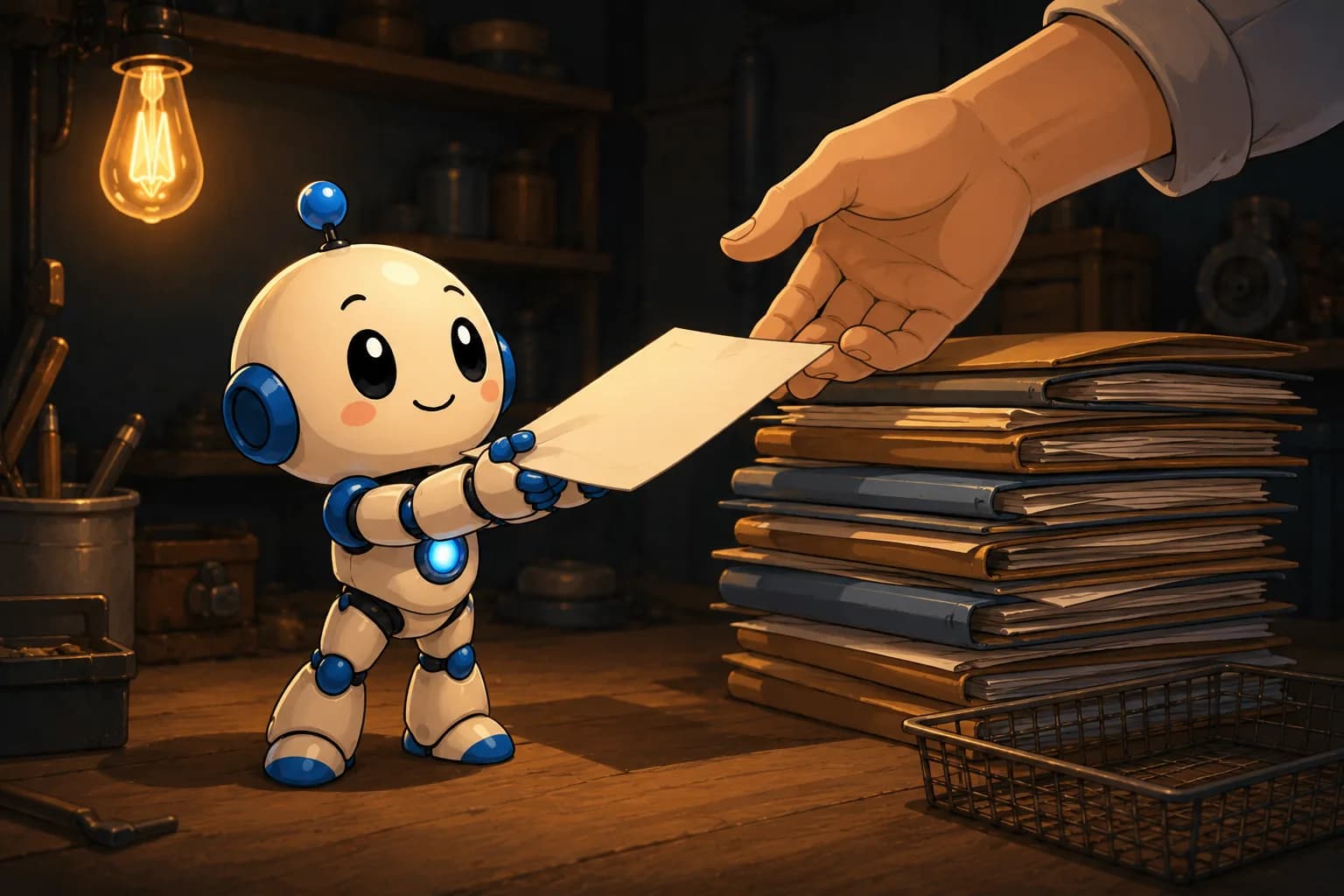
Few topics are discussed as heatedly right now as artificial intelligence at work. Headlines talk about job cuts, advertising promises full automation, and in between sit people wondering whether their work will still be needed in two years. Taking that worry seriously is where every honest conversation about AI starts.
Our position is clear: we do not build AI to replace people. We build it as a tool that people get to hold.
What automation actually takes over
A large share of everyday work in companies consists of tasks nobody enjoys. Sorting receipts. Retyping data out of PDFs. Writing the same reply for the fortieth time. Reconciling lists, transferring forms, chasing appointments. This is the work that leaves you tired in the evening without anything to show that you could be proud of.
That is exactly where automation is strong. One agent reads the invoice, a second proposes how to file it, a third drafts the reply. What remains is the work people were hired for: checking, deciding, negotiating, shaping.
The difference is not cosmetic. A machine that writes a draft takes nobody's job. It takes away the half hour that would otherwise have gone into formatting.
People keep the decision
For us that is not a nice sentence, it is a build instruction. The systems we build make proposals. A human approves them.
This blog is an example of it. Posts can be researched and drafted by an agent in the future, but they land in the database as a draft first. A text only becomes visible once someone has read it and cleared it. The path from draft to publication runs through a person, technically and organisationally.
That is more than a precaution. It is the condition for anyone being able to stand behind a result at all. A system whose output nobody checks any more is not a tool, it is a risk with a power supply.
Where it goes wrong
We keep seeing three patterns.
The first: AI gets sold as a replacement instead of a tool. Replacing a department with a model means losing the knowledge that was never written down anywhere but sat in people's heads.
The second: the data leaves the building. Many convenient tools send documents, customer data and internal material to providers outside Europe. That is comfortable at first and becomes expensive the moment somebody asks who is responsible.
The third: nobody can check the result. If a system produces a number and nobody can trace where it came from, the number is worthless. Trust does not come from a pretty interface, it comes from being able to follow the reasoning.
How we build it
Our way of working follows from that. We rely on systems that stay in the house: self-hosted, on servers in Germany, built from open components so that what actually happens stays verifiable. We do not only develop, we also operate, because software only shows its worth in production.
And we build so that a person can step in at every point that matters. Not as an emergency exit, but as a planned part of the process.
What comes out of it
The most honest description of good automation is unspectacular. There is less idle time in the day. Mistakes caused by retyping disappear. Fewer deadlines slip. And the work that remains is more enjoyable, because it consists of decisions instead of repetition.
AI does not replace people. It should take away the work they never enjoyed doing in the first place.
Was this helpful?